

Finding the right place to call home is fundamental to human dignity and wellbeing. For people requiring significant physical support, however, the housing market can often feel like a maze, full of compromises and obstacles. Standard rental properties, even those advertised as ‘accessible’, frequently fall short of providing the necessary level of safety, independence, and support required for a fulfilling life.
This is where the concept of purpose-built housing for individuals with high support needs comes into its own. Specialist Disability Accommodation, or SDA, isn’t just a house with a ramp; it is meticulously planned and designed residential housing built to facilitate the delivery of complex support services. It represents a fundamental shift away from institutional settings towards genuine, personalised community living. If you are navigating the NDIS and trying to understand your housing options, realising the core differences between SDA and standard housing is the essential first step.
SDA is more than just a roof over your head
To truly understand SDA, we must look beyond the physical structure and focus on the philosophy behind it. Standard housing is built to general building codes. SDA is built to specialised standards that prioritise the needs of the resident first, ensuring that the environment itself works to minimise barriers, not create them. This focus on individualised design is what sets high quality SDA apart from other housing types.
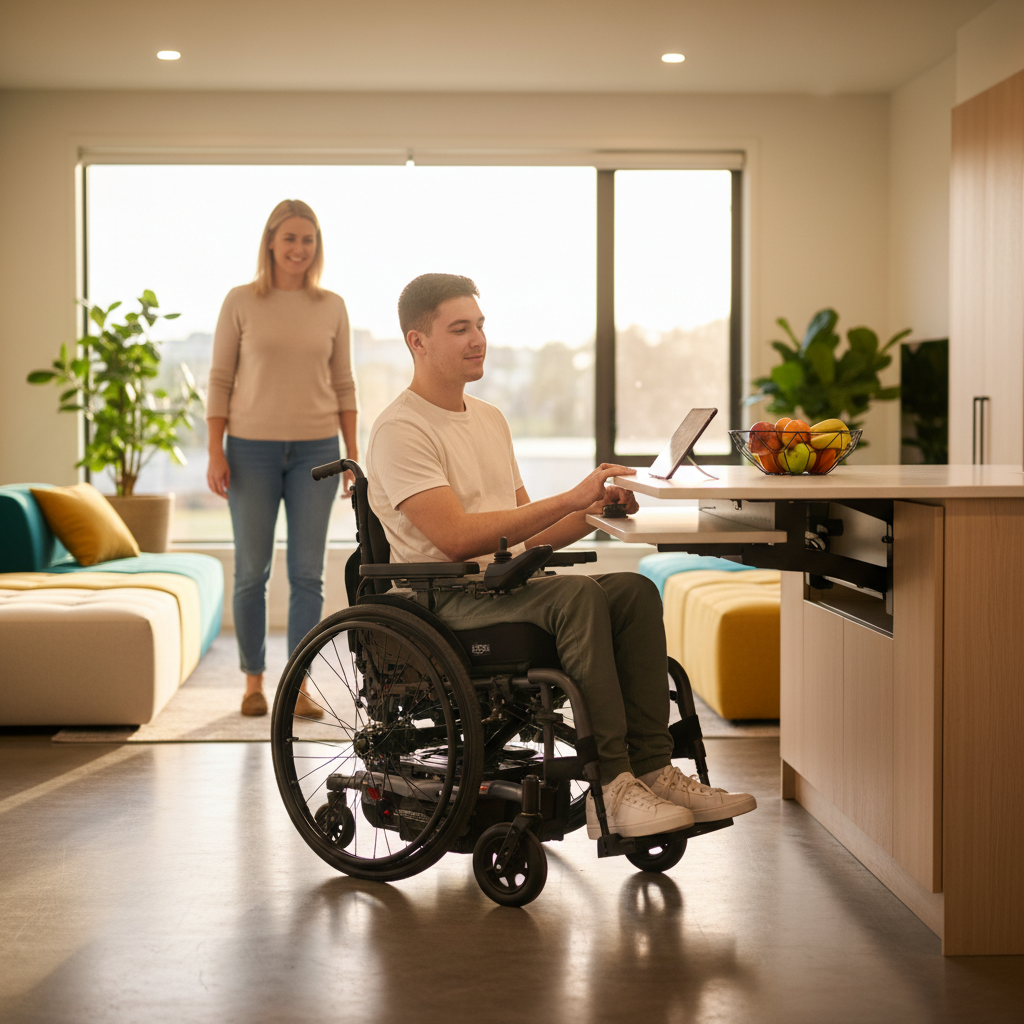
The entire framework is designed to optimise independence and safety. Imagine the frustration of needing help simply to move between rooms, or struggling to use a kitchen benchtop that is the wrong height. SDA housing is constructed specifically to eliminate these daily struggles, integrating technology and thoughtful architecture to empower residents.
Designing for dignity and independence
The physical design of Specialist Disability Accommodation is highly regulated, ensuring consistency and quality across the property sector. These dwellings must meet specific criteria related to size, circulation space, bathroom configuration, and technology integration. For example, doorways are wider, bathrooms often include ceiling hoist tracks, and internal layouts allow support staff to move efficiently without compromising the resident’s privacy or space.
When tradies are putting these homes together, they are working off plans that mandate features far exceeding local council regulations for standard accessible homes. This includes reinforced walls for mounting grab rails, specific floor coverings to minimise trip hazards, and automated systems for lighting, temperature control, and entry/exit. This level of detail ensures that accessing the right type of specialised disability accommodation solutions genuinely enhances the quality of life.
Key features often incorporated in SDA design include:
- Wider corridors and turning circles (often 1500mm or more) to accommodate large powered wheelchairs.
- Reinforced ceilings and walls ready for assistive technology, such as ceiling hoists.
- Assistive communication and security systems, often controlled via tablet or voice activation.
- Height-adjustable benchtops and cooktops in the kitchen.
- Accessible outdoor areas, ensuring ramps and paths are compliant and easy to navigate.
The role of the NDIS
Specialist Disability Accommodation is fundamentally linked to the NDIS (National Disability Insurance Scheme). It is important to note that SDA refers only to the building itself, not the support services provided within it. The NDIS provides funding for eligible participants for two distinct things:
- **SDA Funding:** This covers the capital cost of the dwelling, paid to the provider (the landlord/investor).
- **SIL/Support Funding:** This covers the human support services (staffing) provided to the resident, which is arranged separately.
This separation is crucial. It gives participants choice and control, allowing them to choose their preferred support provider even if they live in a property managed by a different SDA provider. This system is designed to minimise reliance on institutional care and optimise the resident’s independence and personal choice.
Understanding the four main SDA design categories
Not all high-quality disability housing looks the same, nor should it. The NDIS has classified SDA into four distinct design categories to ensure that the housing matches the specific needs and goals of the participant. Choosing the wrong category can severely impact the effectiveness of the support delivered, which is why understanding these differences is paramount.
Improved liveability
This category is designed for people who have sensory, intellectual, or cognitive impairments, or who require less intensive physical modifications. These homes often feature enhanced spatial design, better light and colour contrast, and reduced risk of injury. While they are accessible, they typically don’t require complex structural features like ceiling hoists.
Think of improved liveability as a step up from general accessible housing, offering features that make daily life smoother and less overwhelming for residents who may experience sensory overload or struggle with orientation.
Fully accessible
Dwellings in this category are designed for people with significant physical impairments. They include a high level of physical access features to minimise the need for manual handling and to maximise independence for a wheelchair user.
The focus here is comprehensive accessibility across all internal and external areas. This includes wheelchair-accessible bathrooms, kitchens, and laundries, ensuring that a person using a wheelchair can independently and safely perform essential household tasks. This category is often characterised by generous circulation space and clear access pathways.
Robust
The robust category is specifically built to minimise the risk of physical harm and property damage, and to provide a safe environment for residents and support staff. These dwellings are designed for participants who display complex behaviours of concern, which may include property damage or increased risk of self-harm.
Robust homes feature resilient materials, secure windows and doors, and soundproofing to minimise disturbance to neighbours. They are built to withstand heavy use while still feeling like a comfortable, homely residence. The aim is always to provide a safe, calm environment that supports positive behaviour management.
High physical support
This is the most specialised category of SDA. These dwellings are constructed for individuals with extreme functional impairment or very high support needs. They incorporate maximum levels of physical access, often integrating sophisticated technology and infrastructure.
Key features of high physical support homes include structural provision for ceiling hoists in bedrooms and bathrooms, backup power supplies to ensure critical medical equipment remains operational, and clear lines of sight for support staff. This category ensures that complex, daily support can be delivered safely and efficiently, allowing residents to live independently while receiving intensive care.
How specialist disability accommodation differs from standard accessible housing
A common mistake people make is believing that accessible housing is the same as high quality disability housing. They are fundamentally different concepts, driven by different standards and intended for different needs.
Standard accessible housing typically complies with basic building codes regarding accessibility (like a single ramp or a ground-floor bathroom). It aims for general usability but does not account for complex, individualised support requirements. It’s the difference between a general-purpose vehicle and a highly customised racing car; both are vehicles, but one is engineered for a specific, high-performance task.
SDA, conversely, is certified housing. It is not just compliant with local building codes, but with rigorous, specialised NDIS design standards. The certification process ensures that the dwelling is fit for purpose and specifically caters to the provision of intense support. This distinction is vital for participants who rely on assistive technology or require 24/7 care.
Moreover, SDA homes are built with the long-term needs of the resident in mind. They are designed for durability and flexibility, allowing for the easy installation of complex equipment, whereas trying to modify a standard accessible home to meet high physical support needs often results in expensive, disruptive, and ultimately inadequate alterations.
Finding the right fit: Location and community
While the design is crucial, the location of Specialist Disability Accommodation is just as important. A well-designed home situated kilometres from essential services, transport, and community interaction defeats the purpose of promoting independent living.
SDA providers must prioritise locations that offer genuine community integration. This means being close to public transport, local shops, medical facilities, and opportunities for social engagement. For instance, in areas undergoing significant development, such as finding suitable specialist disability accommodation Brisbane residents rely on, providers need to ensure the properties are integrated into thriving metropolitan or regional centres, not isolated pockets.
When considering a property, ask yourself:
- Can I easily access my chosen day programme or work placement?
- Are local amenities (like the chemist or supermarket) within a reasonable distance?
- Is there reliable public transport nearby, or is the property easily accessible by taxis and ride-share services?
- Will I feel connected to the local community, or will I be isolated?
The goal of the NDIS is to support participants to live ordinary lives. An ordinary life includes the ability to choose where you live and participate fully in your community. The placement of specialist disability accommodation must reflect this commitment to engagement.
Also Read: Struggling to Find SDA? Your Guide to Specialist Disability Accommodation
The pathway to securing your SDA placement
Securing a place in Specialist Disability Accommodation can feel complex, but breaking the process down into manageable steps can help minimise stress and confusion. It requires careful planning and collaboration with your support coordinator.
Step 1: Determine eligibility and funding
First, you must be an NDIS participant. Your planning meeting will determine if you meet the eligibility criteria for SDA funding. This usually requires evidence that you have an extreme functional impairment or very high support needs that necessitate a specialised dwelling.
Step 2: Define your housing goals
Work with your support coordinator or occupational therapist to clearly define what you need in a home. What design category is essential? What location? What is your preferred residency arrangement (e.g., solo living, shared living)? This detailed profile is crucial for matching you to appropriate housing.
Step 3: Finding the right provider and property
This involves engaging with registered SDA providers. They manage the properties and ensure they meet the regulatory standards. They will match your profile (category, location, and preferred sharing arrangement) with available vacancies. This is where providers who specialise in this area truly demonstrate their expertise.
Step 4: Review and approval
Once a suitable vacancy is identified, the provider will submit the necessary documentation to the NDIA for approval. This ensures that the property meets all requirements and that the funding is correctly allocated.
Remember, while the process is bureaucratic, the outcome is transformative: achieving the independence and security that comes with having a truly suitable home environment. The focus throughout should be on what design and supports will best optimise your living arrangements through specialist disability accommodation.
The long-term value of specialised housing
Investing in, or moving into, Specialist Disability Accommodation is about future-proofing. It is designed to be a durable, adaptable, and long-term solution that evolves with the resident’s needs. Because these homes are built to such high standards, they often minimise the need for future modifications, saving time, money, and disruption.
Furthermore, living in a home that is optimally designed for your support needs can significantly reduce the overall cost of care. When a home is easy to navigate, support staff can work more efficiently, often reducing the total hours of assistance required. This efficiency allows NDIS funding to be used more effectively across other areas of your plan, such as therapy, community access, or skill development.
The difference between struggling in a sub-optimal house and thriving in a purpose-built dwelling is immeasurable. It shifts the focus from managing constant housing challenges to pursuing life goals and enjoying community connection. This commitment to delivering truly appropriate housing is what drives the entire SDA sector.
Frequently asked questions about SDA
What is the difference between SDA and SIL?
This is one of the most common points of confusion. SDA (Specialist Disability Accommodation) is the funding for the physical building or housing itself. SIL (Supported Independent Living) is the funding for the human support services provided within the home, such as staff assistance with cooking, showering, and daily tasks. You can have SDA without SIL, or SIL in a non-SDA dwelling, but often, participants with high needs require both.
Do I have to share my SDA home?
No. While many SDA properties are designed for shared living (typically 2-3 residents) to foster community and optimise support funding, the NDIS also funds individual SDA dwellings for participants whose needs or circumstances require single residency. Your eligibility for solo living will be determined by your NDIS plan and specific support requirements.
Who owns and manages specialist disability accommodation?
SDA properties are owned by registered SDA providers, who may be private investors, non-profit organisations, or specialist housing companies. These providers are responsible for maintaining the property to the required NDIS standards. They act as the landlord, while separate support providers deliver the care services.
What happens if my needs change over time?
SDA homes are designed to be adaptable. If your needs change, the property should be able to accommodate reasonable modifications or the integration of new assistive technology (such as a different type of hoist or communication system). If your support needs change drastically, your NDIS plan may be reviewed to determine if a move to a different SDA category is necessary, but the initial design aims to specialist disability accommodation future-proofs your tenancy.
Is SDA available in regional areas?
Yes. While demand is high in metropolitan centres, the NDIS recognises the need for suitable housing across the country, including regional and remote areas. The supply of professional specialist disability accommodation is constantly growing, and providers are continually developing new projects to meet the geographical needs of participants.
